
Why Your Car Battery Dies in September (and How a 10-Minute Test Saves Your Cold Morning)
Your car started every morning through July and August. Now September arrives, the mornings feel sharper, and the engine hesitates before turning over.
Maybe the starter sounds slower than usual. Perhaps your headlights look a little dim at idle. Or you have already needed a boost once and assumed it was a fluke.
In Airdrie and Calgary, these are often the first clues that a battery that survived summer may not survive winter.
The good news? You do not have to wait for a cold, inconvenient no-start morning to find out. A professional battery and charging-system check can often take about 10 minutes and give you a much clearer answer before the temperature drops further.
Why September Exposes a Weak Battery
A car battery does not suddenly become bad because the calendar changes. Instead, cooler weather reveals weaknesses that warm weather was hiding.
A lead-acid battery relies on a chemical reaction to produce electrical current. As temperatures fall, that chemical reaction slows down. The battery produces less available power, even though your engine needs more power to start.
That creates a difficult combination:
- The battery’s available output drops.
- Cold engine oil becomes thicker.
- The starter motor must work harder.
- The engine requires more cranking power to fire.
This is where cold cranking amps, or CCA, matter. CCA is a battery’s ability to deliver power during a cold start. You can think of it as the battery’s winter starting reserve.
At comfortable summer temperatures, a marginal battery may still have enough reserve to start your car. At -15°C or -25°C, that same battery may not have enough strength to turn the engine quickly enough.
That is why a battery can appear “fine” in August and fail in September or October.
Four Signs Your Battery May Not Be Ready for Winter
Your dashboard may not provide a clear warning before a battery fails. Instead, watch for changes in how your vehicle starts and behaves.
1. The engine cranks slowly
When you turn the key or press the start button, does the engine sound sluggish?
A healthy starting system should crank with consistent energy. A slower, laboured sound may mean the battery is losing reserve capacity, the terminals have a poor connection, or the starter is drawing too much current.
2. Your lights appear dim
Do the headlights dip noticeably when you start the engine? Do the interior lights flicker or seem weaker than usual?
Dimming lights can point to a weak battery, poor electrical connections, or a charging-system issue. It does not automatically mean the battery itself needs replacement.
3. You have needed a boost
One boost does not always prove that the battery is finished. You may have left a light on, made several short trips, or parked the vehicle for an extended period.
However, needing a second boost is a strong reason to schedule testing. A jump-start gets you moving temporarily; it does not identify why the battery went flat.
4. The battery is more than three or four years old
Battery life varies with vehicle type, driving habits, heat, cold, and maintenance. But once a battery passes the three- to four-year mark, it deserves closer attention before an Alberta winter.
Age alone does not justify replacing a battery that tests healthy. It does justify checking it.
Why a 10-Minute Test Beats Waiting for a No-Start
Waiting for the battery to fail gives you the worst possible testing conditions: a dark morning, a cold vehicle, a missed appointment, and possibly a vehicle parked somewhere inconvenient.
A short preventive check can answer several important questions before that happens.
Step 1: The battery’s condition is checked
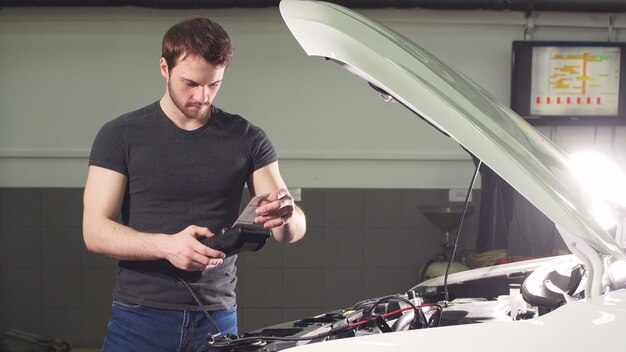
A technician checks the battery’s state of charge and starting ability using appropriate testing equipment. Depending on the battery and test method, this may involve a conductance test or a controlled load test.
A load test places an electrical demand on the battery to see whether its voltage remains strong under stress. In simple terms, it asks:
Can this battery deliver the power your starter will need on a cold morning?
A battery can show acceptable voltage while sitting still and still fail under load. That is why checking voltage alone is not enough.
Step 2: The battery rating is compared with the vehicle’s needs
The CCA rating printed on the battery should meet your vehicle manufacturer’s specification. The goal is not to install the biggest battery available or sell you an unnecessary upgrade.
The goal is to confirm that:
- The battery is the correct size and type.
- Its CCA rating is appropriate.
- It is securely mounted.
- The terminals and cables are clean and tight.
- The ground connections are in good condition.
A strong battery cannot deliver its available power through a corroded terminal or damaged cable. Electricity needs a clear path, just like water needs an open pipe.
Step 3: The alternator and charging system are checked
Your alternator recharges the battery while the engine is running. If it is undercharging, the battery may never fully recover after each start.
A charging-system inspection checks the alternator’s output and performance under electrical load. It can also identify problems with:
- Alternator voltage regulation
- Drive-belt condition
- Battery cables
- Ground connections
- Charging-system wiring
- Smart-charging controls on newer vehicles
Modern vehicles do not always maintain one fixed charging voltage. Their computers may adjust alternator output based on battery temperature, electrical demand, and driving conditions. That is one reason proper testing is more useful than relying on a quick visual check.
Step 4: Parasitic draw is considered if the battery keeps going flat
A parasitic draw is electrical current used by the vehicle after it has been switched off. Some draw is normal. Your security system, clock, and control modules need a small amount of power.
The problem occurs when a component continues drawing too much current after the vehicle should have gone to sleep.
Possible causes include:
- A glove-box or hatch light staying on
- An aftermarket remote starter or audio component
- A control module that fails to shut down
- A faulty relay
- Wiring damage
- An infotainment or communication system fault
A proper parasitic-draw test allows the vehicle’s modules to enter sleep mode before measurements are taken. On a late-model vehicle, that may require patience and diagnostic experience. Simply disconnecting parts at random can create new problems and still miss the original fault.
Why “Just Replace the Battery” Is Not Always the Right Answer
Replacing the battery may solve the problem if the battery has genuinely reached the end of its service life.
But what if the alternator is not charging it correctly?
What if a module is draining it overnight?
What if corrosion at the ground connection is restricting current?
In those cases, a new battery may appear to fix the vehicle for a short time. Then the same no-start problem returns weeks or months later.
That is why the best approach is not trial-and-error parts replacement. It is a logical sequence:
- Test the battery.
- Inspect the cables and connections.
- Check the alternator and charging system.
- Investigate parasitic draw when symptoms suggest an overnight drain.
- Replace or repair only what the results justify.
At Tools in Motion, this diagnostic approach is especially important for late-model vehicles. Modern cars contain multiple electronic modules, networked computers, and battery-management systems. A weak battery can create warning lights and communication faults, while an electronic fault can also drain a perfectly good battery.
Our auto diagnostic services are designed to look beyond the first symptom and find the reason behind it.
What Airdrie and Calgary Drivers Should Do This September
Before the first serious cold snap, take a few practical steps:
- Check your battery’s age and CCA rating.
- Pay attention to slow cranking or dim lights.
- Schedule a battery and charging-system test if you have needed a boost.
- Have the terminals, cables, and engine grounds inspected.
- Ask for a parasitic-draw check if the battery repeatedly goes dead overnight.
- Avoid relying on short trips to recharge a weak battery.
- Confirm your block heater is working if your vehicle uses one.
- Keep a record of the test results for future maintenance.
A seasonal vehicle inspection in Airdrie is a practical way to check more than the battery. It can also help identify worn belts, tire concerns, fluid issues, brake problems, and other items that matter before winter driving arrives.
Tools in Motion also provides free maintenance schedules and reminders, helping you stay ahead of routine service instead of trying to remember everything yourself.
Get Ahead of the First Cold Morning
Your battery may not be asking for replacement yet. It may only need a proper test, a clean connection, a charging-system check, or a deeper electrical diagnosis.
That distinction matters. Honest testing can save you from both an unexpected breakdown and an unnecessary repair.
If your vehicle is showing early warning signs, book a battery check with the Tools in Motion team in Airdrie. We can test the battery, inspect the charging system, and investigate hidden electrical issues when needed: not simply recommend a new battery without finding the cause.
Whether you need routine maintenance or specialized car electrical repair in Airdrie, a 10-minute check now can help protect your schedule, your wallet, and your peace of mind when winter finally arrives.
Book an appointment and start the season with a stronger, more worry-free drive.