
Why Advanced Car Diagnostics Will Change the Way You Look at Your Dashboard in 2026
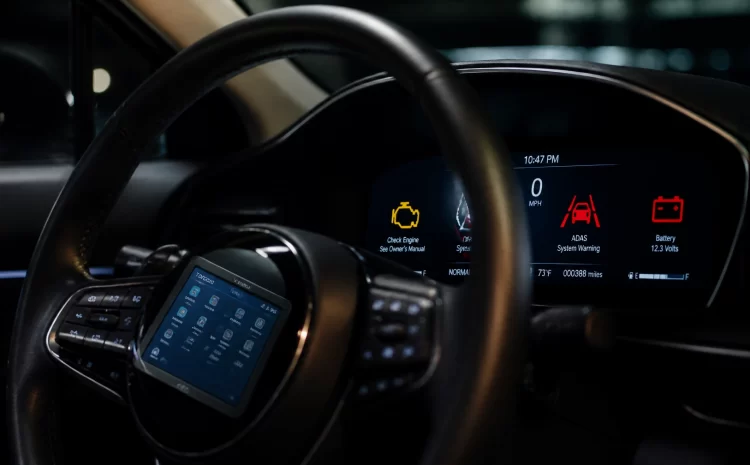
It’s a scenario every driver in Airdrie and Calgary knows all too well. You’re cruising down the Deerfoot, perhaps heading home after a long day or starting a weekend mountain getaway, when a sudden ding echoes through the cabin. A small, amber icon: the dreaded “Check Engine” light: illuminates on your dashboard.
In the past, that light was a simple mechanical trigger, often linked to a single sensor like a loose gas cap or a worn-out oxygen sensor. But as we move through 2026, your car is no longer just a collection of mechanical parts; it is a sophisticated, rolling supercomputer. That single light is now the “tip of the iceberg,” representing a complex web of interactions that a simple “scan and clear” can’t solve.
At Tools in Motion, we see these scenarios daily. Whether it’s a family SUV or a high-end late-model sedan, understanding what your dashboard is actually telling you is the first step toward a worry-free driving experience. In this guide, we’ll pull back the curtain on advanced car diagnostics in Calgary and explain why today’s vehicles require more than just a quick code scan.
The Evolution of the “Check Engine” Light
Back in the day, a mechanic could often “hear” what was wrong with a car. A rhythmic ticking might mean a valve issue; a high-pitched squeal pointed toward a belt. While those mechanical diagnostic skills are still vital, the modern mechanic in Airdrie must now be part software engineer and part electrical detective.
Today’s vehicles rely on dozens (and sometimes hundreds) of Electronic Control Units (ECUs) or modules. These modules control everything from your engine’s timing and transmission shifts to your Advanced Driver Assistance Systems (ADAS): like lane-keep assist and emergency braking. These systems are interconnected through a high-speed communication network known as the CAN bus (Controller Area Network).
Think of the CAN bus as the car’s nervous system. When you press the brake pedal, that signal isn’t just moving a hydraulic fluid; it’s sending a data packet across the network to tell the brake lights to turn on, the transmission to prepare for a downshift, and the ADAS camera to stay alert for a potential collision.
When a dashboard light comes on in 2026, it’s often because one of these data packets didn’t arrive on time, or a module “lost its voice” on the network. This is the new reality of auto diagnostics explained, where the physical part might be fine, but the digital communication has broken down.
The Trap of the $20 Code Reader
We’ve all seen them: the inexpensive Bluetooth code readers sold at big-box stores or online. It’s tempting to plug one in, see a code like “P0171,” and think, “I can fix this myself.” However, in the world of advanced vehicle electronics, these basic tools can often be more misleading than helpful.
A cheap code reader only “whispers” a small part of the story. These tools typically only access generic OBD-II data: the bare minimum required by law for emissions testing. They cannot see the deeper manufacturer-specific codes, the live data streams from the transmission, or the status of the communication network itself.
Why is this a problem? Imagine your car has a “ghost code.” This is a fault triggered not by a broken sensor, but by a momentary voltage drop. In modern vehicles, if your battery is slightly weak, the sensitive electronics may fail to boot up correctly, throwing a dozen different codes for systems that are actually perfectly healthy.
A basic reader will tell you to replace those sensors. A professional technician performing car electrical repair in Airdrie will look at the battery health and the CAN bus stability first, saving you hundreds: or even thousands: in unnecessary parts.
“Ghost Codes” and the Hidden Impact of Voltage
Have you ever noticed your car acting strange on a cold Alberta morning? Maybe the radio flickers, or the steering feels a bit heavy for the first block, only to have a warning light disappear once the car warms up?
This is where the “show, don’t just tell” approach of professional diagnostics becomes invaluable. Here is how we track down those elusive electrical gremlins:
- Full System Health Report: We don’t just scan the engine. We scan every single module: from the seat heaters to the radar sensors in your bumper.
- Network Stability Test: We check the “traffic” on your CAN bus. Are the modules talking to each other at the right speed?
- Voltage Drop Testing: We measure how much power is actually reaching the modules. A tiny bit of corrosion on a ground wire can act like a “clog” in a pipe, preventing the computer from getting the power it needs to function.
- Module Interrogation: If a module is unresponsive, we determine if it’s a “hard failure” (the module is dead) or a “software glitch” that requires module programming.
By following this logical, chronological phase of testing, we avoid the “parts cannon” approach: where a shop just keeps replacing parts until the light goes out. We find the root cause, which is often a simple electrical connection or a software update.
Why Professional Tools are Essential in 2026
In 2026, the gap between a “handyman” and a professional technician has never been wider. The tools we use at Tools in Motion are the same (or better) than those found at the dealership. These devices allow us to perform “bi-directional testing.”
What does that mean? It means we can use our tablet to tell your car to do something: like roll down a window, turn on a fuel pump, or recalibrate a steering angle sensor. This allows us to prove exactly where a failure is occurring without taking anything apart. It’s like having an MRI for your car.
Furthermore, many modern repairs require module programming or “coding” to the vehicle. If you replace a headlight on a 2026 model, the car might not recognize it until a technician “introduces” the new part to the central computer. This level of specialized programming is what sets a specialized shop apart from a general repair garage.
Peace of Mind for Airdrie and Calgary Drivers
We understand that car repairs can be stressful. Your vehicle is your lifeline: it gets the kids to hockey practice, takes you to work, and keeps you safe on icy highways. When a warning light appears, it’s easy to feel a sense of frustration or anxiety about the potential cost.
Our goal at Tools in Motion is to replace that anxiety with clarity. By using advanced car diagnostics in Calgary, we provide you with a detailed map of your vehicle’s health. We don’t just give you a list of problems; we explain why they happened and which ones are priorities for your safety and the long-term value of your car.
Whether you’re dealing with a stubborn “Check Engine” light, a weird electrical flicker, or you just want a professional “health check” before a long road trip, our team of experts is here to help. We pride ourselves on getting the job done right the first time, using the best technology available to keep you moving safely.
Your Path to a Worry-Free Drive
Don’t let a mysterious dashboard light ruin your week. Instead of guessing or relying on a basic code reader that doesn’t tell the whole story, trust the specialists who understand the complex networks of today’s vehicles.
At Tools in Motion, we offer more than just a repair; we offer peace of mind. From deep electrical troubleshooting to advanced ECU programming, we have the tools and the talent to handle the jobs other shops can’t.
Ready to see what’s really going on under the hood? Visit us in Airdrie or contact us today to schedule your advanced diagnostic session. Let’s get your car back to peak performance and ensure your dashboard stays clear for the road ahead.