
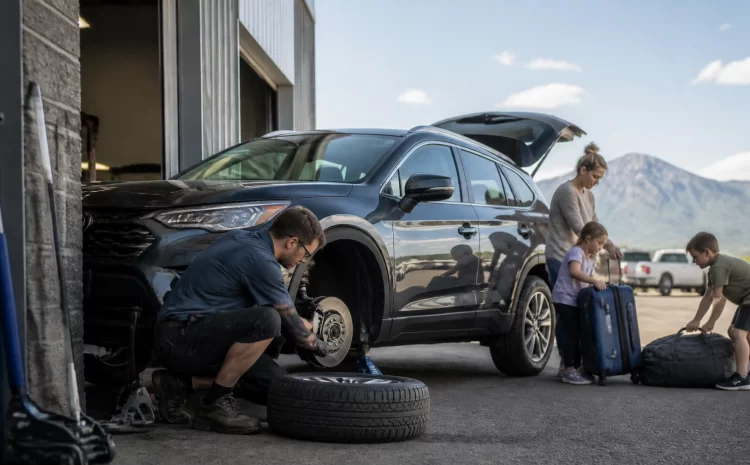
Can a 10-Minute Brake Inspection Save Your Family Road Trip?
The bags are packed. The cooler is full. The children are buckled in, and everyone is ready to leave Airdrie for a summer drive through Alberta.
Then you notice it: a faint squeal when you press the brake pedal. Or perhaps the pedal feels slightly softer than usual. Maybe the vehicle pulls to one side during a stop, but only sometimes.
Should you postpone the trip?
A quick 10-minute brake inspection cannot replace a complete professional assessment, but it can help identify warning signs before your family reaches the highway. It is a low-barrier habit that may catch a fluid leak, a soft pedal, an obvious hose problem, or brakes that are making dangerous noises.
Why take the chance when a few focused checks can provide valuable information before a long drive?
Why brakes deserve extra attention before an August road trip
Alberta road trips often involve long distances, high speeds, heavy vehicle loads, and changing terrain. Your vehicle may spend hours on the highway before descending a hill, navigating stop-and-go traffic, or making an emergency stop.
Brakes do more than slow the vehicle. They help you maintain control when traffic changes suddenly, a deer enters the roadway, or another driver stops without warning.
A family road trip also adds weight. Luggage, camping equipment, sports gear, and passengers all increase the load your vehicle must manage. More weight means the braking system may need to work harder and travel farther before bringing the vehicle to a complete stop.
That is why a quick pre-trip check matters. Think of it as looking for smoke before a small problem becomes a fire.
What a 10-minute brake inspection actually checks
A useful quick inspection follows a logical sequence. You are not trying to disassemble the vehicle in your driveway. You are looking for clues that tell you whether the brakes appear ready for the trip: or need professional attention first.
1. Check the brake warning lights
Start the vehicle and look at the dashboard.
A brake warning light, an ABS light, or a check-engine light related to braking or stability systems should not be ignored. Modern vehicles use several electronic systems to support braking performance, including ABS, traction control, and electronic stability control.
If the dashboard looks like a Christmas tree, the vehicle is telling you that something needs attention.
A warning light does not always identify the failed part by itself. It may point to a wheel-speed sensor, an ABS module, low fluid, or another electrical fault. Proper diagnostic testing is often needed to follow those breadcrumbs.
2. Test the brake pedal
With the vehicle parked safely, press the brake pedal firmly.
The pedal should feel reasonably solid and should not slowly sink toward the floor while you hold steady pressure. A sinking pedal can indicate a hydraulic problem, such as a leak or an issue with the master cylinder.
A spongy or unusually soft pedal may mean air has entered the brake lines, the fluid level is low, or another part of the hydraulic system needs inspection.
Next, start the engine while keeping pressure on the pedal. On a vehicle with vacuum-assisted braking, the pedal may move slightly as the brake booster activates. The important point is consistency: if the pedal suddenly feels very different from normal, the vehicle should be checked before a highway trip.
Do not wait for the pedal to reach the floor before taking action. A change in feel is information.
3. Check the brake fluid
Locate the brake fluid reservoir under the hood. The fluid should sit between the marked minimum and maximum levels.
A low level may indicate worn brake pads, a leak, or another problem in the braking system. Dark or contaminated-looking fluid may also suggest that the system needs service.
Brake fluid is not something to top up blindly and forget. Adding fluid can hide the symptom without correcting the cause. If the level is low, a technician should determine why.
Also look around the reservoir and beneath the vehicle for wet areas. Brake fluid leaks can be difficult to spot, but any suspected leak is a serious reason to stop and arrange an inspection.
4. Listen for brake noises
Take a short, low-speed drive in a safe area with no children or pedestrians nearby. Apply the brakes gently, then with moderate pressure.
Pay attention to unusual sounds:
- High-pitched squealing may indicate that the brake pad wear indicator is contacting the rotor.
- Grinding can mean the friction material is worn away and metal is contacting metal.
- Clunking or knocking may point to loose or damaged brake hardware.
- A scraping sound may be caused by debris, a backing plate, or a more serious brake problem.
Not every squeak means the brakes are failing. Dust, moisture, or surface rust can sometimes create temporary noise. But a noise that repeats, worsens, or appears with other symptoms deserves attention before leaving town.
5. Notice pulling, vibration, or a longer stop
During the same careful test, notice how the vehicle behaves.
If it pulls left or right when braking, possible causes include uneven pad wear, a sticking caliper, a damaged brake hose, or another suspension and steering concern. A vehicle that pulls is not simply being inconvenient: it may not be braking evenly on both sides.
A vibrating steering wheel or pulsing brake pedal can point to rotor runout, uneven rotor deposits, or other rotor problems. A longer stopping distance is also a critical warning sign.
Ask yourself: does the vehicle stop the way it did a month ago?
Drivers often adapt to gradual changes. A pedal becomes softer, the stopping distance grows slightly, or a vibration appears only at highway speed. Because the change happens slowly, it can become the new normal. Your brakes should be evaluated if normal braking no longer feels normal.

What a quick check cannot confirm
A 10-minute inspection is a screening step, not a complete brake inspection.
Some parts of the system cannot be assessed accurately without lifting the vehicle, removing the wheels, measuring components, and testing their operation. A professional inspection may check:
- Brake pad thickness and whether the pads are wearing evenly
- Rotor thickness compared with the manufacturer’s service limit
- Rotor cracks, heat spots, corrosion, or excessive runout
- Caliper piston and slide-pin movement
- Brake hose condition and hidden corrosion on brake lines
- Parking brake operation and hardware
- Brake fluid condition and hydraulic pressure
- ABS components and related warning codes
A pad may look acceptable from outside the wheel while being worn unevenly on the inside. A caliper may be beginning to stick without producing an obvious pull. A brake line may have corrosion in an area that is difficult to see.
This is where trial-and-error repairs can become expensive. Replacing a visible part without identifying the underlying cause may leave the original problem in place. A thorough technician follows the evidence, measures what can be measured, and explains what needs attention now versus what can be monitored.
When to book brake repair in Airdrie before travelling
A professional brake inspection should come before the road trip if you notice:
- Grinding or persistent squealing
- A soft, spongy, or sinking pedal
- A brake warning light or ABS warning light
- Pulling during braking
- Vibration or pulsation
- A burning smell near a wheel
- Fluid around a wheel or under the vehicle
- A significant change in stopping distance
- Brake pads or rotors that have not been checked recently
If the vehicle has been carrying out short city trips all year, the brakes may not have faced the same demands as a loaded vehicle travelling through Alberta’s highways and hills. A pre-trip check is an opportunity to discover that before the family is far from home.
Tools in Motion’s brake repair service in Airdrie can help identify worn pads, damaged rotors, caliper concerns, and other braking problems before they become a roadside emergency.
Pair the brake check with a broader vehicle inspection
Brakes are essential, but they are only one part of road-trip readiness. A complete vehicle inspection in Airdrie can also review tires, lights, steering, suspension, battery condition, fluid levels, and other systems that matter on a long drive.
This is especially useful when:
- The vehicle is carrying a full family and luggage load
- The trip includes mountain roads or long highway stretches
- The vehicle has recently had a warning light
- The tires, battery, or fluids have not been checked recently
- You are planning to drive far from repair facilities
A reputable auto repair shop in Airdrie should be willing to explain its findings clearly. You deserve to know which items are safety concerns, which repairs are recommended, and which components can be monitored during routine maintenance.
Conclusion: a few minutes can protect the journey
So, can a 10-minute brake inspection save your family road trip?
It can catch warning signs early and help prevent you from starting a long drive with an obvious brake problem. It cannot measure everything or guarantee that every hidden issue has been found: but it is a smart first line of defence.
Before heading out this August, check the lights, pedal, fluid, sounds, and stopping behaviour. If anything feels wrong, schedule a professional inspection before putting your family on the highway.
For dependable brake service and peace of mind, contact Tools in Motion in Airdrie. A careful inspection today can help make tomorrow’s drive safer, calmer, and worry-free.