
Modern Car, Modern Problems: Why Your Vehicle’s Electrical System Needs a Specialist, Not a Guess
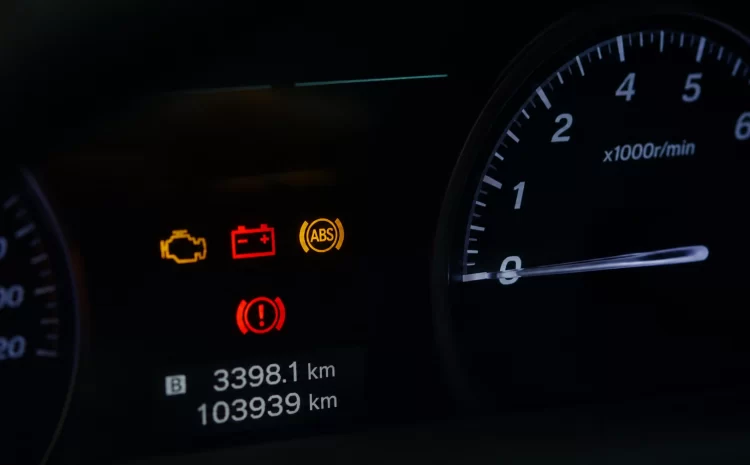
Have you ever started your car on a cold morning only to have the dashboard light up like a Christmas tree? One second everything is fine, and the next, your screen is shouting about ABS failures, traction control issues, and a “check engine” light that won’t go away. It’s frustrating, it’s stressful, and for many drivers, it’s the start of a very expensive guessing game.
In the old days, say, twenty or thirty years ago, cars were relatively simple. If a light came on, it usually meant a single sensor had failed or a wire had come loose. You could often trace the problem with a test light and a basic set of tools. But today? Your vehicle is essentially a high-performance computer network on four wheels. When things go wrong with the electronics, the “old school” approach to fixing cars just doesn’t cut it anymore.
If you’re looking for reliable car electrical repair in Airdrie, you’ve likely realized that not every shop is equipped to handle these modern headaches. At Tools in Motion, we see it every day: vehicles that have been from shop to shop, having parts thrown at them in the hope that something sticks. We call this the “parts cannon” approach, and it’s the fastest way to drain your bank account without actually fixing your car.
The Modern Vehicle: A Network, Not Just a Machine
To understand why your car needs a specialist, you first have to understand what’s happening under the hood. A late-model vehicle can have anywhere from 50 to 150 individual computers, known as Electronic Control Units (ECUs) or modules. These modules handle everything from how much fuel your engine sips to how your power windows behave.
These computers don’t work in isolation. They are constantly talking to each other through a high-speed communication network called a CAN bus (Controller Area Network). Think of it like a group chat where every module is sharing data. If the transmission module needs to know the engine speed, it “listens” to the engine module. If the ABS module senses a wheel slipping, it tells the engine to cut power and the transmission to shift differently.
When a fault occurs, it’s rarely as simple as “the part is broken.” Sometimes a module has a “glitch” in its software. Other times, a wire in that communication network has frayed, causing the modules to stop talking. This is where car diagnostics in Calgary and Airdrie become complex. A simple code reader might tell you there’s a communication error, but it won’t tell you where the break is. Finding that requires a specialist who knows how to read the “breadcrumbs” left behind by the digital system.
Why the “Parts Cannon” Fails You
We’ve all been there, a mechanic tells you, “The code says it’s an O2 sensor, so we replaced it.” Two days later, the light is back on. Then they tell you, “Well, maybe it’s the wiring harness,” and the bills keep mounting.
This happens because many shops treat a Diagnostic Trouble Code (DTC) as a definitive answer. In reality, a code is just a starting point. If a code says “Low Voltage at Sensor X,” it doesn’t mean Sensor X is bad. It could mean:
- The sensor is failing.
- The wire leading to the sensor is broken.
- The module providing power to that sensor has internal damage.
- A ground connection three feet away is corroded.
By using the “parts cannon,” a shop is guessing with your money. Specialized auto repair in Airdrie should involve a logical, step-by-step diagnostic process. We use advanced oscilloscopes to actually “see” the electrical signals moving through the wires. If the signal looks like a messy scribble instead of a clean square wave, we know exactly where the interference is coming from before we ever order a part.

The Mystery of Module Programming
One of the biggest hurdles in modern repair is that parts are no longer “plug and play.” Back in the day, if your alternator or your wiper motor died, you bought a new one, bolted it on, and went about your day.
Today, many components: especially control modules: must be “introduced” to the car. This is called module programming. When we install a new Body Control Module or a Transmission Control Module, we have to use factory-level software to program your vehicle’s VIN (Vehicle Identification Number) into that part. Without this step, the car’s security system might think the part is stolen and refuse to let the engine start.
In some cases, we can even perform module cloning. This is a specialized service where we take the data from your failing original module and “copy-paste” it onto a replacement. This can save you hundreds, if not thousands, of dollars by allowing the use of a refurbished part that otherwise wouldn’t work. This level of module programming car service is something most general shops: and even some dealerships: aren’t set up to do.
Why Technical Expertise Saves You Money
It might seem counterintuitive, but paying for a specialist’s diagnostic time usually ends up being the cheaper option. Here’s why:
- Accuracy Over Guesswork: Instead of replacing four different sensors (the “parts cannon”), we spend the time to find the one broken wire or the specific software update that solves the issue. You pay for the expertise, not for parts you didn’t need.
- Preventing “Collateral Damage”: An electrical short in one system can eventually fry an expensive module elsewhere. Identifying the root cause early prevents a small $200 repair from turning into a $2,000 disaster.
- Efficiency: We have the same tools the dealerships use, plus the specialized knowledge to go deeper into the “why” of a failure. This means your car spends less time on a lift and more time on the road.
We take pride in being the “shop for the shops.” Other mechanics and even local dealerships often send us their most difficult electrical “ghosts” because they know we have the deep advanced auto diagnostics equipment required to solve them.
What to Look for in a Repair Specialist
If you’re dealing with an electrical nightmare, don’t just go to the closest shop. Ask them a few questions:
- “Do you use an oscilloscope for electrical testing?”
- “Can you perform in-house module programming and coding?”
- “Do you have access to factory-level wiring diagrams for my specific make and model?”
If the answer is “we just use a code reader,” you’re likely headed for the parts cannon. A true specialist in car electrical repair near Airdrie will be able to explain the communication network of your car and show you exactly where the failure is occurring.
Peace of Mind on the Road
Your vehicle is a significant investment, and its electrical system is the “brain” that keeps everything running safely and efficiently. Whether it’s a nagging warning light, a battery that mysteriously dies overnight, or a module that simply won’t cooperate, these aren’t problems you want to leave to chance.
At Tools in Motion, we believe in transparency and precision. We don’t want to just fix the symptom; we want to solve the problem for good. By combining high-end technology with years of specialized experience, we provide the kind of auto diagnostics that give you real answers and, ultimately, peace of mind.
Don’t let a “modern problem” leave you stranded or broke from unnecessary repairs. When the lights start flashing, trust the specialists who know how to talk to your car’s computer.
Ready to stop the guessing game? Whether you need deep diagnostics, module programming, or just an honest second opinion, our team is here to help. Contact us today to book your appointment and get your vehicle back to its best. Let’s get you back on the road with a car you can actually rely on.