
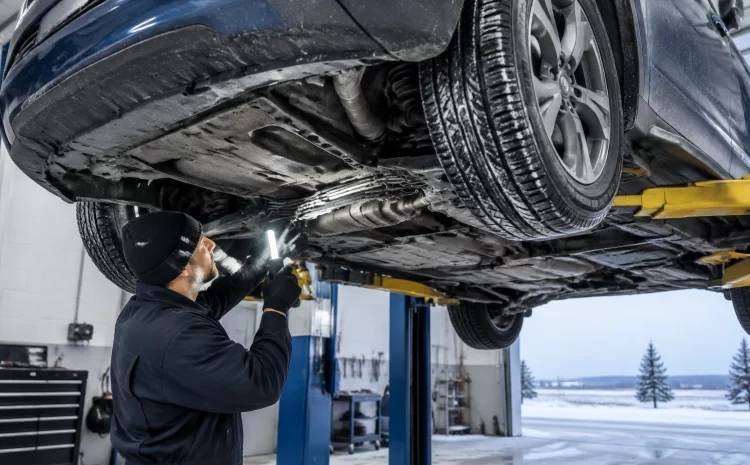
Rust Never Sleeps: What Airdrie Road Salt Does to Brake Lines and Undercarriage (and the Cheap Habit That Slows It)
A winter drive can leave your vehicle looking clean enough, until you notice the slush packed into the wheel wells or hear a new scrape from underneath. Road salt and brine are part of winter driving around Airdrie and Calgary, but what you can’t see on the body panels may matter more: corrosion on brake lines, fasteners, electrical connections and other undercarriage components.
This doesn’t mean every salted road puts your vehicle in immediate danger. Corrosion is usually a gradual process. The useful question is what you can do to reduce salt buildup and catch problems before they become repairs.
Why salt and moisture are a tough combination
Salt on its own isn’t the whole story. Corrosion speeds up when salt and moisture meet metal. A salty film can cling to the underside of a vehicle, while slush and meltwater carry it into seams, joints and tight spaces. When temperatures move above and below freezing, those surfaces repeatedly get wet and dry, or wet again.
Think of salt residue as grit in a sponge: a rinse can remove what’s on the surface, but material tucked into a seam or wheel well may take more attention. The process happens out of sight, so a clean-looking exterior doesn’t tell you everything about the underside.
What parts can be affected?
Salt and moisture can reach several areas beneath your vehicle. The condition of any specific part depends on its design, age, previous repairs and exposure, which is why inspection matters more than guessing from appearance.
- Brake lines: These carry brake fluid between components. Salt and moisture can corrode the outside of a line, particularly where residue collects. That’s important because a line can deteriorate from the outside inward, even when the problem isn’t obvious from the driver’s seat.
- Brake and fuel hardware: Brackets, clips, fittings and other metal parts can corrode. Fuel lines and their connections also deserve attention during an undercarriage check.
- Subframe and suspension components: These support or connect parts of the vehicle. Surface rust can be common, but a technician needs to assess whether corrosion is limited to the surface or affecting a component’s condition.
- Exhaust components: The exhaust system sits beneath the vehicle and faces road spray. Corrosion can affect pipes, hangers and joints over time.
- Electrical connectors and grounds: Connections near the underside can be exposed to water and salt. Corrosion or damaged sealing may contribute to electrical problems, though a warning light alone doesn’t prove salt damage is the cause.
Of these, brake lines deserve particular care because they’re part of the braking system. A visual check through a wheel opening may not show the full length of a line or the areas where it’s clipped and routed. If you notice a soft or changing brake pedal, a brake warning light, or fluid leaking near a wheel or beneath the vehicle, have it assessed promptly rather than waiting for the next seasonal service.
A seasonal inspection should look beyond the brake pads
A brake check that looks only at pad thickness can miss other issues underneath. Pads are important, but they’re just one part of the system.
A more complete inspection can follow these steps:
- Check the brake lines and hoses. A technician looks for visible corrosion, damage, leaks and condition at connection points. Lines and flexible hoses are different parts, and both need to be assessed.
- Inspect brake hardware. Calipers, brackets, clips and other components are checked for corrosion or damage that could affect operation or make future service difficult.
- Look at nearby underbody areas. Depending on the vehicle, this includes accessible fuel-line routing, subframe areas, suspension hardware, exhaust components and electrical connections.
- Assess what the findings mean. Surface discoloration doesn’t automatically mean a part needs replacement. The goal is to distinguish ordinary surface rust from damage that needs attention and explain the next step clearly.
That’s the difference between a meaningful vehicle inspection in Airdrie and a quick glance at the wheels. If you’d like to understand what a thorough check can involve, learn more about vehicle repair and services or read about timely brake repair.
The inexpensive habit: rinse underneath regularly
The simple habit that helps is rinsing salt and slush from the undercarriage and wheel wells during winter. You don’t need a complicated routine. A wash with an undercarriage spray can help remove buildup from areas a quick rinse over the body won’t reach.
Pay particular attention after a heavy stretch of slushy driving and when the weather turns mild. A chinook or other above-freezing day can leave roads wet and expose the underside to fresh spray; it’s also a practical opportunity to wash away residue before temperatures drop again.
A few useful points:
- Choose a wash that includes an undercarriage rinse.
- Direct attention to the wheel wells, where slush can collect.
- Use a sensible rinse rather than forcing high-pressure water into electrical connectors, damaged seals or other openings.
- If you wash in cold weather, consider the temperature and drying conditions so doors, locks and brakes aren’t left wet before a hard freeze.
A freshwater rinse is helpful, but it isn’t rust-proofing. It won’t reverse existing corrosion or guarantee that every tight space is clean. Rust-proofing products also differ in how they’re applied and what they’re designed to do; they aren’t all interchangeable. If you’re considering a product, ask what it covers and whether it suits your vehicle and its existing condition.
For general winter vehicle-care advice, see Transport Canada’s guide to preparing your vehicle for winter. Toyota Canada also shares practical guidance on protecting your vehicle from winter roads.

When should you book an inspection?
A pre-winter check gives you a chance to identify concerns before regular salt exposure begins. A mid-winter check can also make sense if your vehicle has seen a lot of slush or you haven’t had the underside looked at in a while. Your maintenance schedule, driving conditions and the vehicle’s history all matter; there isn’t one rust timeline that applies to every car.
Don’t wait for visible rust on the body to decide whether the undercarriage needs attention. Instead, book an inspection if you notice a brake-fluid leak, a brake pedal that feels different, a new warning light, unusual noises, or a change in how the vehicle stops. Those symptoms have multiple possible causes, so a proper diagnosis is more useful than assuming salt is to blame.
If you’re looking for brake repair in Airdrie, ask whether the inspection includes brake lines, hoses and hardware, not just pads and rotors. Tools in Motion serves drivers in Airdrie and Calgary with general repairs, maintenance and inspections, and the team can explain what it finds before recommending work.
Rinsing away winter grime is a small, practical habit. Pair it with an inspection that checks what’s underneath, and you’ll have a clearer picture of your vehicle’s condition, and more peace of mind when it’s time to drive. Book an appointment for a pre-winter or mid-winter undercarriage and brake line inspection, and take one more worry off your list.